Gwangjang Market Food Guide: What to Eat at Seoul's Most Famous Market
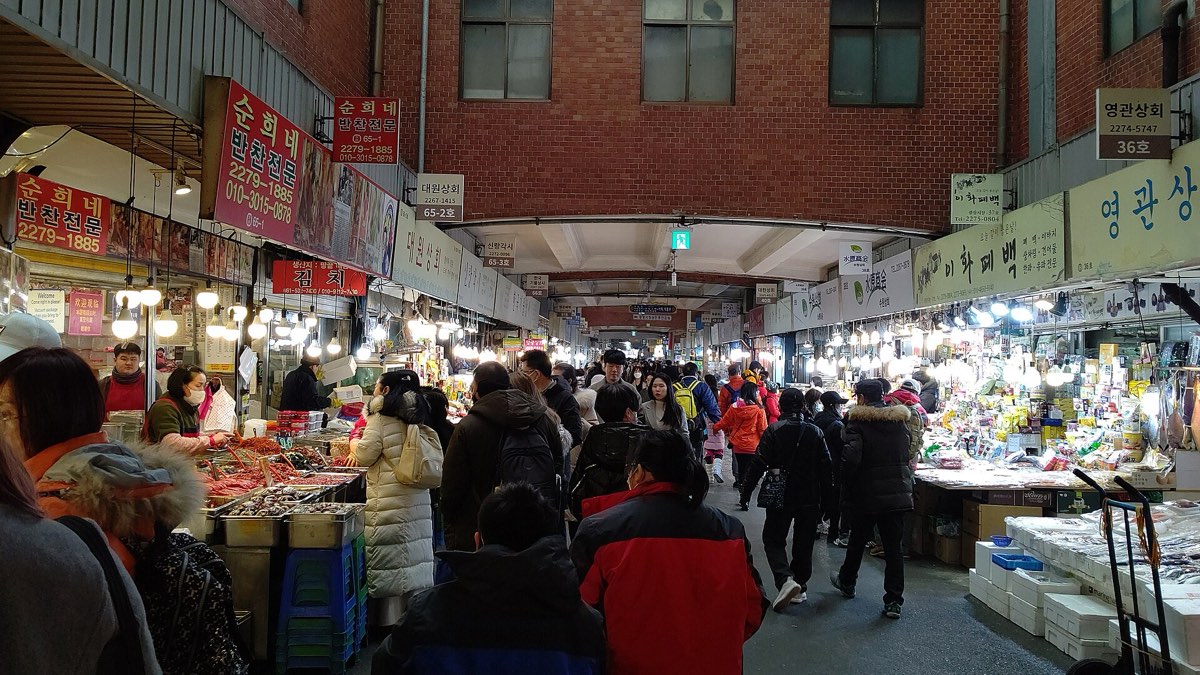
If one place explains why foreign visitors now hunt down markets instead of malls, it’s Gwangjang Market (광장시장) — a 120-year-old covered market in Jongno where the food alleys have become a global pilgrimage site. You’ve seen it on screen even if you don’t remember: its lantern-lit noodle stalls are one of the most-filmed food settings in Korea, and it stars in seemingly every Netflix food show that touches Seoul.
It’s also ten minutes from the palace-and-hanok heart of Seoul’s drama filming territory, which makes it the natural lunch stop on any Seoul location day.
The big three
Bindaetteok (빈대떡) — mung beans ground fresh on stone mills, fried into thick, crackling pancakes in a pool of oil. One pancake (₩5,000–6,000) feeds two with makgeolli. The grinding mills stacked with beans are the market’s signature image.
Mayak gimbap (마약김밥) — literally “narcotic gimbap”: bite-size seaweed rolls with pickled radish and carrot, dunked in hot mustard sauce. The name is a joke about how you can’t stop eating them. A plate runs about ₩3,000–5,000.
Yukhoe (육회) — Korean beef tartare, hand-cut, dressed with sesame oil and a raw egg yolk, often topped with strips of raw octopus. The market has an entire yukhoe alley of licensed specialists; expect ₩15,000–20,000 a plate and possibly a queue at dinner.
Beyond the famous stuff
- Kalguksu curtain stalls — sit at the wraparound counters where ajummas assemble noodle bowls at high speed
- Tteokbokki + sundae + twigim — the classic street-food trio, done market-style
- Hotteok — brown-sugar filled pancakes, the walking dessert
- Jokbal and bossam stalls for the adventurous second round
How to do it right
- Go hungry, order small. Everything is share-size; the right way is one dish per stall across four or five stalls.
- Sit where locals sit. Shared benches are normal — squeeze in, point at what your neighbour’s having.
- Cash helps. Cards work at most sit-down spots now, but small stalls prefer cash.
- Timing: weekday lunch or late afternoon beats weekend evenings, when queues for the famous stalls get long.
Getting there
Seoul Metro Line 1 to Jongno 5-ga, Exit 8 puts you at the gate. The market sits between two drama-heavy neighbourhoods — the Cheonggyecheon stream is two minutes south, and Bukchon, Gyeongbokgung and the Deoksugung stone wall are a short bus or subway hop west. Fold it into our 3-day Seoul K-drama itinerary as the Jongno-day lunch.
Frequently asked questions
What food is Gwangjang Market famous for?
The big three are bindaetteok (crispy mung-bean pancakes fried in oil), mayak gimbap ('narcotic' mini seaweed rice rolls with a mustard dip), and yukhoe — Korean beef tartare, served in a dedicated alley of specialist restaurants. Knife-cut noodles, tteokbokki and hotteok round out the classics.
What are Gwangjang Market's opening hours?
The food alleys generally run about 09:00–23:00, with individual stalls setting their own hours and rest days (many close one day a week, often Sunday or Monday). Go at lunch or late afternoon for the full atmosphere with shorter queues.
Does Gwangjang Market take credit cards?
Most sit-down stalls now take cards, but some street stalls remain cash-first. Bring some ₩10,000 notes to be safe — there are ATMs near the market entrances.
How do I get to Gwangjang Market?
Take Seoul Metro Line 1 to Jongno 5-ga Station, Exit 8 — the market entrance is right there. From Euljiro 4-ga Station (Lines 2 and 5), it's about a 5-minute walk.