- Address
- Guryongpo-eup, Nam-gu, Pohang-si, Gyeongsangbuk-do
- Getting there
- KTX to Pohang Station, then bus 900 or a 40-minute taxi to Guryongpo.
- Hours
- The village and the Japanese House street are open at all hours. Guryongpo Modern History Museum 09:00–18:00, last entry 17:30 — closed Mondays, the day after a public holiday, 1 January and Chuseok day.
- Admission
- Village and street free; free public car park at Guryongpo harbour. The history museum house is ticketed separately.
Guryongpo Village
Free to visitThe streets cost nothing and never close; only the museum house has hours — and it shuts on more days than most visitors expect.
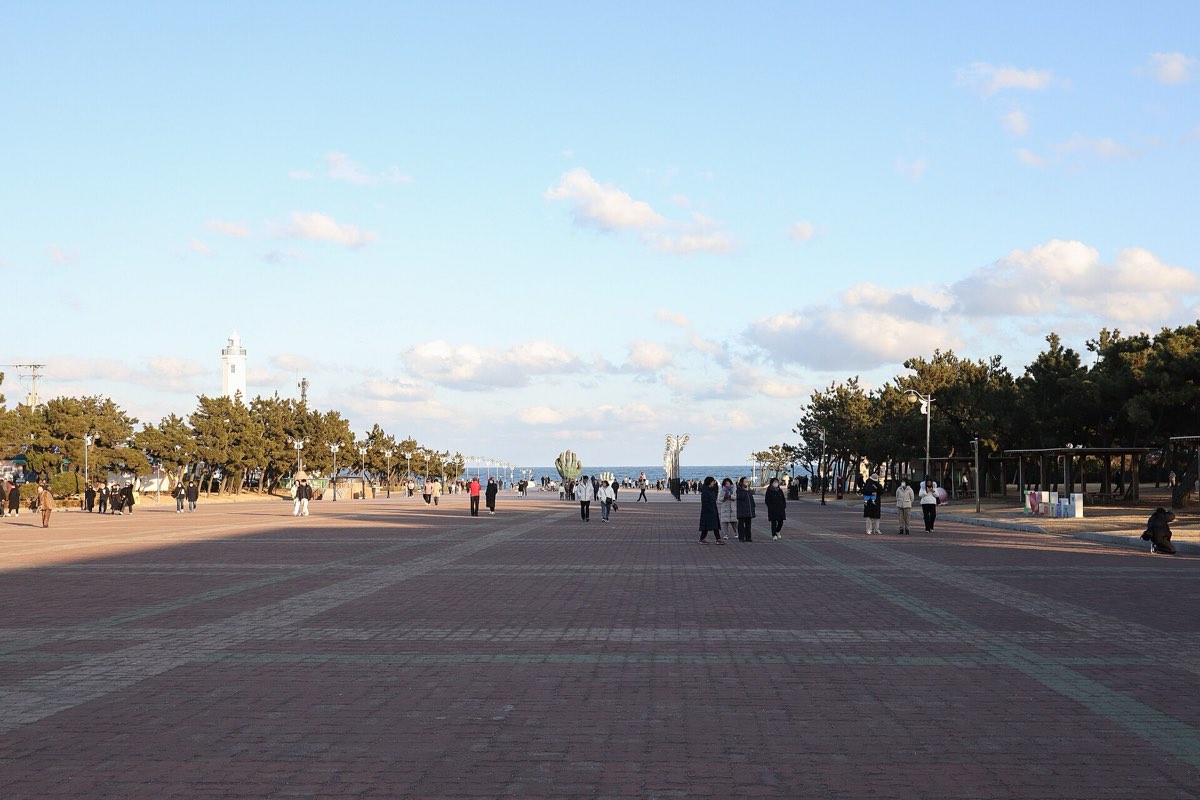
A Pohang fishing town of cliffside lanes and a Japanese-era heritage street — the real face of Hometown Cha-Cha-Cha's Gongjin, gwamegi capital of Korea.
What Korean visitors report
🔎 Last checked · August 2026Korean-language visitor reports carry details that English guides do not — what is still standing, what closed, and what the walk from the car park is actually like. We read them and summarise the facts here.
- The museum closes on more days than you would guess
- Guryongpo Modern History Museum is shut on Mondays, on the day after any public holiday, on 1 January and on Chuseok day. The day-after-a-holiday rule is the one that catches people, because it is not a fixed date. Last admission is 17:30, half an hour before closing.
- It is not pushchair-friendly inside
- The staircases in the museum house are narrow and steep. The street outside is fine, but the interior is not manageable with a pushchair.
- Parking is free at the harbour
- Use the public car park at Guryongpo harbour; it costs nothing. The gwamegi and mulhoe restaurant street nearby also has free parking.
- Why a Japanese quarter is here at all
- After the 1883 Korea–Japan trade agreement, Japanese fishing families settled along the Korean coast, and Guryongpo — already a working fishing port — grew into one of their larger communities. The preserved street is what they left. Knowing that changes how the buildings read.
- The hilltop viewpoint is a climb
- The neighbourhood viewpoint on Gonryunsan that appears in visitor photos involves a real uphill walk. Korean visitors say it is worth it but do not undersell the effort.
- The drama houses are lived in
- Hye-jin's and Du-sik's houses sit on the lanes above the harbour and are private homes in an occupied neighbourhood. Shoot from the street.
Sources checked:
- Guryongpo Modern History Museum published opening informationOfficial
- Korean visitor reports, 2026 — parking, access, viewpointVisitor report
Dramas filmed at Guryongpo Village
Visiting tips
The drama houses sit a minute apart on the lanes above the harbor — they’re private homes in a lived-in neighborhood, so shoot from the street and keep voices down. The town has embraced its Gongjin identity: signboards and a marked walking course connect the spots.
Guryongpo’s own attraction predates the drama: the Japanese House Street, a preserved 1900s colonial-era fishing quarter, and winter’s gwamegi (half-dried saury) — the town is Korea’s capital of it. Come November–February to eat it the local way, wrapped in seaweed with raw garlic.
What’s nearby
Homigot Sunrise Square — the giant bronze “Hand of Harmony” rising from the sea, Korea’s mainland easternmost point — is 20 minutes up the coast and pairs with Guryongpo for the classic Pohang half-day. The rest of the Hometown Cha-Cha-Cha map (Cheongha Market, Wolpo Beach, the hilltop boat) lies on Pohang’s northern coast, best chained by car or taxi.